Occasional Paper Series #55
La Gran Historia de Dilly Meets the Science of Reading: A Cuento of Scripts, Skills, and Silenced Selves
by Elenita Irizarry Ramos and Ysaaca Axelrod
Since 2019, more than 40 US states have enacted early literacy statutes advertised as grounded in the Science of Reading (SOR). In 2024, 15 states strengthened these policies by pairing new phonics curricula with fidelity checks and teacher‑training mandates (DeMauro-Mullins, 2025). Advocates hail the movement as a long‑overdue corrective to stagnant National Assessment of Educational Progress (NAEP) scores; critics warn that a narrow skills focus sidelines comprehension, pleasure, and culturally sustaining pedagogy, especially in bilingual settings. As dual-language programs expand across the US, publishers have increasingly translated English-language curricula into Spanish to meet growing demands. However, emerging research cautions that translated materials may fail to account for the linguistic and cultural needs of Spanish-speaking students (Ramirez et al., 2018). This issue is particularly salient as districts increasingly adopt curricula aligned with the SOR approach to literacy instruction. Such shifts raise concerns about the use of translated texts and the reliance on practices that may not correspond to diverse orthographies or that risk constraining the linguistic richness of multilingual communities. These practices may marginalize translanguaging, which draws on students’ full linguistic repertoires and affirms the fluid ways multilingual children construct meaning across languages (García et al., 2025).
In this article, we conduct a Critical Discourse Analysis (CDA) (Fairclough, 1995; Janks, 1997) of two literacy lessons that build around the anchor text La gran historia de Dilly. These lessons are part of a commercially produced and widely distributed reading curriculum that follows a structured literacy approach and is available in both English and Spanish for dual-language programs. The lessons we are focusing on are for first grade and are part of the first module that is introduced at the beginning of the year. We center on the Spanish language component of this curriculum. These research questions guide our inquiry:
- How do commercially produced SOR-aligned materials for Spanish dual-language classrooms
constrain or enable culturally sustaining and linguistically responsive literacy instruction? - What power/knowledge relations are embedded in the pedagogical routines, linguistic structures,
and moral narratives promoted by the lesson? - What linguistic assumptions are embedded in the foundational skills routines, and how might they
affect bilingual learners’ development in Spanish?
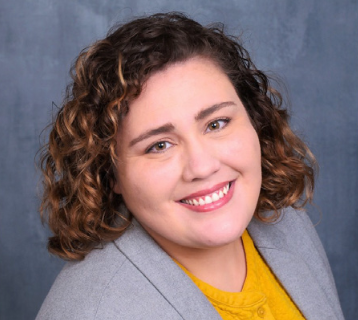 Elenita Irizarry-Ramos is a bilingual education leader, scholar, and practitioner committed to advancing equitable, high-quality multilingual education. She teaches graduate courses in bilingual education and Teaching English as a Second Language at UMass Amherst and the University of Puerto Rico. Her work centers on dual language program design, policy implementation, educator preparation, and instructional quality, with a focus on language, identity, and justice for multilingual learners across diverse educational contexts.
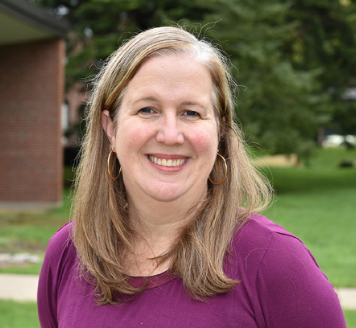 Ysaaca Axelrod is a former kindergarten teacher and currently serves as an associate professor at the University of Massachusetts Amherst, where she prepares future early childhood and elementary educators. Her research focuses on language and literacy development in emergent bilingual children and the role of play, and she is currently engaged in projects exploring the intersection of climate change, justice, and literacy education.