Occasional Paper Series #55
Bank Street School for Children’s Story of Integrating Structured Phonics into a Progressive Literacy Approach
by Melanie Bryon, Doug Knecht, Emily Linsay, and Emily Schottland
For decades, literacy education in our schools has been shaped by a fierce debate between two polar approaches: whole language versus phonics-based instruction. What many of us know as “the reading wars” have effectively polarized educators, researchers, and policymakers for more than a generation, which has, for the most part, been to the detriment of children. On one side, advocates of whole language emphasize meaning-making, literature-rich environments, and literacy connected to real life child-centered experiences (Goodman, 1998; National Education Policy Center, 2018); on the other, proponents of phonics prioritize decoding, explicit instruction in sound-letter correspondences, and systematic skill-building (National Institute of Child Health and Human Development, 2000). While stakeholders holding these opposing stances make a case against the “other side,” our experience tells us that the most promising solutions lie in a thoughtful blend of multiple perspectives that extend beyond any one “simple view” of how to teach reading (Gotlieb et al., 2022; Duke & Cartwright, 2021, p. 525).
Over the past eight years, the Bank Street School for Children (SFC), a progressive independent (i.e., private) school with deep roots in experiential and child-centered education), has engaged in an evolutionary shift in its approach to literacy. 1 By integrating structured phonics instruction—specifically through the adaptation of a research-based program—into its curricular program from ages 5 and 6 (kindergarten) through ages 9 and 10 (fourth grade), the SFC has redefined what it means to provide equitable, developmentally appropriate, and research-based reading instruction. In doing so, our school community has developed a compelling model for bridging the historic divide between proponents of one side or the other, reshaping the narrative of the reading wars into one of synthesis rather than an existential dilemma.
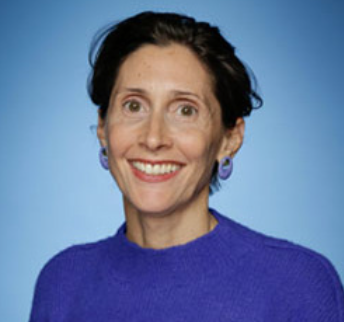 Melanie Bryon joined the School for Children faculty in 2017 as a lower school learning specialist and has since become an integral member of the Bank Street community. She currently serves as the Dean of Children’s Programs and Head of the School for Children. Melanie brings more than 25 years of experience in education, including 14 years in public K–8 school administration. Prior to Bank Street, she served as principal and superintendent at Harlem Village Academy and as principal of Community Partnership Charter School in Brooklyn.
 Doug Knecht is the senior director of education practice and innovation at USC CANDLE, where he partners with researchers and practitioners to build practical resources for secondary school educators rooted in the science of adolescent development. He previously served as the founding vice president of the Bank Street Education Center and the Dean of Children’s Programs and Head of the School for Children at Bank Street College. Doug began his career as a high school science teacher and later joined the New York City Department of Education central office as a leader of academic policy and school quality efforts, including oversight of 300 of the City’s schools.
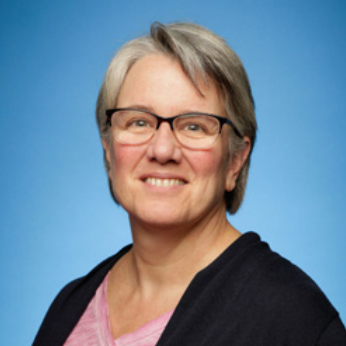 Emily Linsay has been a Bank Street School for Children faculty member since 1995. She is proud of the fact that she once set out to bike across the USA and nearly made it! Emily is inspired daily by the children, families, faculty and staff at Bank Street.
 Emily Schottland has been working in the field of education for 20 years. Currently, Emily is the literacy specialist at Bank Street School for Children. She also worked as a classroom teacher in New York City Public Schools before specializing in literacy. She has also been an adjunct professor at Bank Street Graduate School of Education and a teaching fellow in Brandeis University’s Teacher Leadership program.