 The Bank Street Education Center has released a new report examining how leadership coaching can support principals as they lead complex school redesign efforts. The report, titled “Human-Centered Leadership Coaching for School Redesign and Career Connected Learning: Insights from the First Two Years of the Principal Innovation Fellowship,” highlights lessons from the first cohort of the Principal Innovation Fellowship (PIF), a program led by the Responsive Design team in the Bank Street Education Center in partnership with New York City Public Schools to help support school leaders to integrate career-connected learning, including strengthening teacher practices, student and family engagement, and postsecondary readiness.
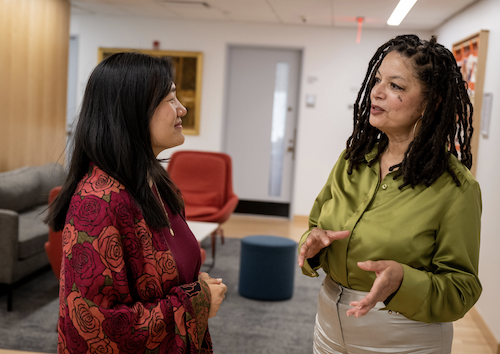
The two-year fellowship pairs principals with experienced leadership coaches from the Bank Street Education Center as they work to implement FutureReadyNYC, a districtwide initiative designed to redesign the high school experience so that every student graduates prepared for both college and in-demand careers. Through individualized coaching, peer learning opportunities, and school visits, the fellowship supports principals in advancing initiatives such as career-connected instruction, work-based learning opportunities, and early college pathways.
“Principals are often asked to lead ambitious change while managing the day-to-day realities of running a school,” said Tracy Fray-Oliver, Vice President, Bank Street Education Center. “The Principal Innovation Fellowship creates the time and space for leaders to reflect, work through challenges with a trusted coach, and move complex initiatives forward in ways that are sustainable for their school communities.”
The report draws on interviews with four principal-coach pairs who participated in the fellowship’s first cohort. Through detailed case studies, it explores the challenges principals encountered as they implemented career-connected learning pathways in fields such as business and finance, education, healthcare, and technology.
Across schools, principals described balancing the demands of school leadership—from improving attendance and graduation rates to responding to student needs—while also leading major redesign efforts. Coaching relationships provided a structured space for reflection, strategic planning, and problem-solving.
In one case, a founding principal with a long history of innovation was working to launch a data science pathway for student learning. While the principal had a strong vision, the challenge was pacing the work so teachers could meaningfully engage with it. Her coach focused on helping her slow down the process, involve staff in decision-making, and align the pace of change with the team’s readiness. Over time, the coaching relationship helped shift leadership practices toward greater collaboration and distributed responsibility across the school.
Another case highlights the experience of a veteran principal leading a transfer school for overage and undercredited students. By the time he joined the fellowship, he described feeling professionally isolated—a common experience for school leaders responsible for complex decisions with limited opportunities for candid discussion. Coaching sessions created a space to analyze data, address operational challenges, and strengthen the school’s career-connected learning programming.
Across the case studies, several shared themes emerged. Principals frequently navigated competing demands while working to introduce new programs and pathways for students. They also faced both technical challenges, such as managing data systems or accountability measures, as well as adaptive challenges that required shifts in leadership practice, school culture, and collaboration.
The report identifies a set of coaching practices that helped principals address these challenges. These include building strong relationships with school leaders, serving as thought partners rather than prescriptive advisors, helping principals prioritize their work, and creating space to reflect on both the practical and emotional dimensions of the role.
“The work of leading school transformation is incredibly complex,” said Shael Polakow-Suransky, GSE ‘00, President, Bank Street College. “Human-centered coaching can help principals navigate that complexity, supporting them as leaders while also strengthening the systems and opportunities that benefit students.”
As districts across the country work to expand career-connected learning and redesign the high school experience, the report offers insights into how leadership coaching can support principals leading that work. By creating space for reflection, collaboration, and strategic planning, the Principal Innovation Fellowship demonstrates how sustained leadership support can help principals translate ambitious ideas into lasting change for their schools and communities.