To honor National Poetry Month, a Young Reviewer shares their thoughts about Kin: Rooted in Hope by Carole Boston Weatherford, illustrated by Jeffrey Boston Weatherford.

Young Reviewers
To honor National Poetry Month, a Young Reviewer shares their thoughts about Kin: Rooted in Hope by Carole Boston Weatherford, illustrated by Jeffrey Boston Weatherford.

Dear Children’s Book Committee, Since hearing the news of the Josette Frank Award from the Center for Children’s Literature of Bank Street College, I’ve been going through the lists of past winners, sort of reveling in the memories of past winners that I read as a kiddo.

The Lost Year is a historical fiction coming-of-age story told through three entwining timelines. It is at the top of my “best books of 2023” list. The story occurs in the early 2020 COVID-19 pandemic in the United States and the 1930s Holodomor in Soviet-occupied Ukraine.

Young Reviewers: Mason 7, Napali 8, Nora 7, and Penny 7, from New York City (and their wonderful teacher) give their thoughts on Tadgh Bentley’s book “One Chicken Nugget.”

Judit Polgár does a great job of showing kids how anything is possible. What happened was that a girl was taught how to play chess and she went to tournaments with very underrated odds and crushed adults with her skills.

The element that makes this book so captivating is the lack of a complete story until the very end. As the book progresses, many seemingly random flashbacks come together to form one cohesive whole. Throughout the book, you might find yourself questioning what really is happening and wondering if there’s something more to the relatively simple story of a family grieving.

I liked the part where Gus said so many rhyming words. I find it special because my grandma gave it to me. I could tell that Mavis Mole was frustrated that Gus wouldn’t listen. The rhymes are fun.

The story’s plot is expertly crafted, skillfully weaving together individual experiences and intricate connections that support the overall narrative. The book engaged me as a reader, as I was drawn to the small details (like a red hair bow), that tied it all together.

The characters in the book were very well written, I felt myself being mad/sad/happy for or at them, which is the marking of a clever book. The main character, Simon, went from a lonely, traumatized boy, to a happy, sociable, traumatized boy.

I really liked the plot. I found it very interesting and heart-warming. I loved how it shows the main character throughout a year as she discovers her sexuality and finds a family.

This book inspires young people to stand brave in the face of fear and injustice by highlighting a touching example of a mother who had to do the same. It shows young readers the racism and prejudice of the time while encouraging them to keep making change in the present. It is both educational and encouraging, while not shying away from darker themes.

I enjoyed the shifts between poetry and prose, depending on the character the author was writing about. I also enjoyed how the poetry about Savage’s sculptures were coupled with photographs of the sculptures.
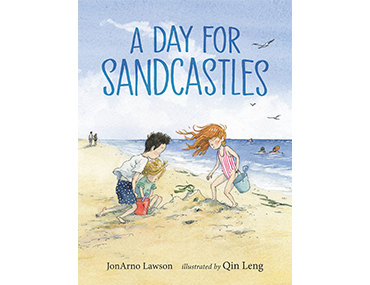
I liked the book because I think it is cool that it doesn’t have any words so you can make up different versions of the story. The illustrations helped me understand what they are doing and how they are doing, and I think the pictures are very detailed so you can understand them well.

Teenagers have more power than they are often given credit for. Moonwalking is a book that inspires teens no matter their background or identity to fight for what they believe in. It is a story about art, and how change is made with art.

The March Children’s Book Committee’s Young Reviewer Post is from 15 year-old, Nikhil, from Englewood, NJ who rated The Peach Rebellion by Wendelin Van Draanen from Knopf Books for Young Readers as Excellent! Read more about his review on our website.